
How ERP Systems Can Prepare for UAE E-Invoicing in Dubai
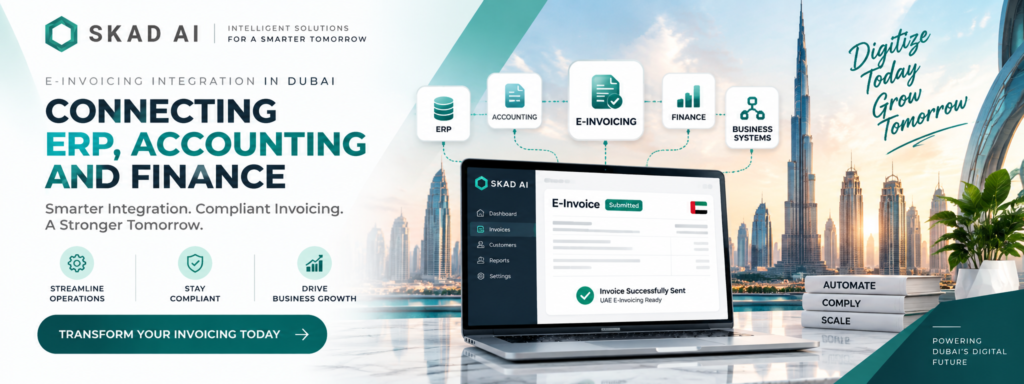
The transition to electronic invoicing is changing how businesses in Dubai will create, exchange, process and manage invoices. For many companies, the challenge is not simply selecting an e-invoicing solution in Dubai. It is making sure that existing accounting systems, ERP platforms, customer records, tax information and internal finance workflows are ready for the new environment.
The UAE Ministry of Finance has already established the national e-Invoicing framework, with implementation taking place in phases. Businesses can voluntarily adopt e-Invoicing from July 1, 2026, while mandatory implementation dates depend on the applicable business category and revenue threshold. For Dubai businesses, this makes preparation an important part of digital finance planning.
Is Your Business Ready for E-Invoicing?
Before implementing new software, businesses should first understand how invoices currently move through the organisation.
A typical Dubai business may generate invoices through an ERP system, accounting software, CRM, POS platform or even customised business software. Invoice information may then pass through finance teams, approval processes, customers and payment systems.
The first step is therefore to map the complete invoice lifecycle and identify where manual entry, spreadsheets, PDF invoices, email approvals or duplicate data entry are currently being used. This assessment can reveal which areas need to be changed before e-Invoicing is introduced.
Review Your Existing ERP and Accounting Software
One of the most important preparation steps is checking whether existing business software can support the UAE’s e-Invoicing requirements.
Businesses should examine how their ERP or accounting platform creates invoices, stores tax information, manages customer and supplier data, and connects with external systems. If the existing software cannot support the required structured invoice data or integration model, the business may need an upgrade, middleware solution or additional integration layer. The objective should be to make e-Invoicing part of the existing financial workflow rather than creating another disconnected invoicing system.
Clean Your Customer and Supplier Data
Poor-quality business data can create problems during digital invoicing. Dubai companies should review customer names, addresses, tax registration information, supplier information, invoice numbering, tax rates, product descriptions and other relevant fields before implementation.
Duplicate customer records or incomplete tax information can result in invoice validation issues and reconciliation problems. Data cleaning may therefore be one of the most valuable preparation activities before connecting an organization to an e-Invoicing environment.
Prepare Your Finance Team
Technology alone does not make an e-Invoicing implementation successful. Finance, accounts payable, accounts receivable, procurement and operations teams also need to understand how their daily processes will change. Employees may need to work with new invoice statuses, automated validations, digital approvals, rejection workflows and electronic records.
Training should therefore be included in the implementation plan rather than being treated as a final step.
Understand the UAE E-Invoicing Timeline
The UAE is introducing eInvoicing through a phased approach. Under the current Ministry of Finance guidance, businesses with annual revenue of AED 50 million or more have a mandatory implementation date of January 1, 2027, while businesses below AED 50 million have a mandatory implementation date of July 1, 2027.
The Ministry has also amended certain deadlines, including extending the deadline for businesses above AED 50 million to appoint an Accredited Service Provider to October 30, 2026, while the January 1, 2027 implementation date remains unchanged. This means businesses should consider implementation, testing and staff preparation well before their applicable deadline.
Choose the Right Integration Approach
Every business has a different technology environment. A small service company may use accounting software, while a large Dubai enterprise could have ERP, CRM, procurement, inventory and billing systems operating together.
The e-Invoicing architecture should therefore be designed around the existing technology environment. An effective integration strategy can connect invoice generation with the relevant e-Invoicing infrastructure while allowing finance teams to continue using familiar business systems. The UAE framework uses accredited service providers to support electronic invoice exchange, making service-provider selection an important part of implementation planning.
Test Before Going Live
Testing is another important stage that businesses should not overlook. Companies can test invoice generation, customer information, tax calculations, invoice numbering, validation, exchange, rejection handling and reconciliation before moving fully into production.
Testing can also identify problems between ERP systems and external e-Invoicing infrastructure before they affect real transactions. A controlled testing phase gives finance and technology teams an opportunity to correct issues and improve workflows.
Build an E-Invoicing Implementation Roadmap
A practical implementation roadmap can start with a business and technology assessment. The next stage can involve data preparation, system configuration, integration, service-provider selection, testing and employee training. Businesses can then establish monitoring procedures for invoice failures, rejected transactions, reconciliation and reporting.
This approach turns e-Invoicing from a compliance project into a structured digital transformation initiative.
Why Dubai Businesses Should Start Preparing Early
Waiting until the mandatory deadline can create unnecessary pressure on finance and IT teams. Businesses that begin early have more time to identify software limitations, clean business data, evaluate service providers, test integrations and train employees.
The Ministry of Finance has described e-Invoicing as part of the UAE’s wider digital transformation and highlights objectives including digitalization, efficiency, transparency and compliance. For Dubai companies, preparation can therefore be approached as an opportunity to modernize financial processes alongside meeting the regulatory timeline.
How SKAD AI Innovate Solutions Can Help
SKAD AI Innovate Solutions provides e-invoicing technology designed to connect digital invoicing with business systems and workflows. Its existing solution offering includes invoice automation, validation, ERP and accounting integrations, workflow automation, API connectivity, status tracking and digital archiving. For businesses preparing for UAE e-Invoicing, the focus should be on understanding the existing technology environment first and then designing an implementation approach that fits the organization’s operational requirements.
Conclusion
Preparing for eInvoicing in Dubai involves more than purchasing invoicing software. Businesses need to review their existing systems, clean financial data, understand implementation timelines, prepare employees, select appropriate service-provider arrangements and test their invoice workflows.
With the UAE eInvoicing programme moving into its implementation phase, businesses that begin this preparation process early can create a more organised transition from traditional invoicing to structured digital transactions.
FAQs
What is e-invoicing integration in Dubai?
E-invoicing integration connects a company’s ERP, accounting, billing, or business software with the required e-invoicing infrastructure to automate electronic invoice processing.
Can e-invoicing be integrated with existing ERP software?
Yes. E-invoicing can be integrated with existing ERP and accounting systems through APIs or other supported integration methods, depending on the software architecture.
Why is ERP integration important for UAE e-invoicing?
ERP integration can reduce manual invoice entry, improve data consistency, automate invoice workflows, and help businesses prepare their systems for UAE e-invoicing requirements.
Can SMEs in Dubai integrate e-invoicing with accounting software?
Yes. SMEs can evaluate integration options based on their existing accounting platform, invoice volume, business processes, and applicable UAE e-invoicing requirements.
What business systems can connect with e-invoicing?
Depending on the implementation, e-invoicing can connect with ERP, accounting, billing, CRM, procurement, inventory, and other financial systems.
How does API integration support e-invoicing?
APIs allow different business systems to exchange invoice and transaction data electronically, helping reduce manual processes and create a more connected finance workflow.
When should Dubai businesses start preparing for e-invoicing integration?
Businesses should assess their existing systems and integration requirements ahead of their applicable UAE e-invoicing implementation deadline.